“My passion is to identify the skills needed to use AI with success …”
John Hattie’s groundbreaking research has revolutionized the world of education. In our exclusive wbv-blog interview, he talks about teaching with AI – as critically minded as ever.
John Hattie, what can AI do for teaching?
First of all we are impressed by what AI can do, see its potential to revolutionize learning, and believe it can help reduce much of the tedium of classrooms, freeing teachers to focus on their first love – teaching and having the maximum impact on students.
But to introduce AI to schools we need to understand why previous technological revolutions have infiltrated teaching so slowly. Innovations in schools are plentiful, yet schools are often the graveyard of many innovations.
Never underestimate the skills of educators to take an innovation and adapt it to fit in with their current grammar of schooling and thus miss much of the power of the innovation. Larry Cuban (1993), a historian with statistical strength, has provided the most convincing answer. Cuban argues that technology adoption in schools fails when it doesn’t address what teachers see as the real, immediate needs of teachers and students within the structural and cultural constraints of schooling. Teachers are not anti-technology but are selective and practical. For successful adoption, technologies must align with existing teaching practices and goals, be easy to use and require minimal additional effort, and demonstrate clear immediate benefits for student learning. AI will not meet these three criteria.
Why are you skeptical about AI in schools?
The most common reaction to AI right now seems to be skepticism: Why would AI revolutionize schools? There is nothing wrong with the current grammar of schooling and we do not see how AI would fit in. At best, AI will lead to more students being tempted to plagiarize, cut corners, become lazy, and AI will be another form of encyclopedia, at best. Schools are likely to be the last place to adopt and adapt AI.
Do not get me wrong, AI is the most significant innovation in our lifetimes. AI will revolutionize our world (in good and bad ways, see our earlier article, Hamilton et al., 2023). But the prediction here is that schools may be the last place to adopt and adapt AI. This latter, the necessary skills, is the most worthwhile debate we can have to open the door to using AI – as students are going to use it whether teachers adopt it, like it, or ban it.
What AI-skills are necessary for teachers from your point of view?
Our big seven skills include:
Probative questioning. If you ask an AI the wrong question it will give you an answer. AI demands verbose, thought-provoking and exploratory questioning to maximize the insights and effectiveness of AI tools in teaching, learning, or problem-solving. The term “probative” means questions to elicit deeper understanding, evidence, or clarification. More often, a series of probative questions is needed to clarify ambiguities, seek evidence, challenge assumptions, push for depth, and test relevance. Such probative questioning can strengthen the ability to analyze, evaluate and synthesize responses, reduce the reliance on AI, uncover biases or errors, and promote critical thinking.
- Quality control:
- Assessment credibility (is it right or wrong)
- Error management (where did it go off target, knowing when to say No to the machine and search elsewhere or ask for help)
- Evaluative judgment (is it ‘good enough’)
- Feedback and Help-seeking – the skills of not being afraid to engage in challenge and struggle but know when and how to ask for help, know when to move on, when to go deeper, and when to consolidate the learning.
- Guard rails. Having debates about the appropriate and inappropriate use of AI tools (see Hamilton et al., 2023).
- Knowledge. I was recently asked, “Is it better for twins to be in separate classes?” and had no idea about the research. So I used Storm (from Stanford) to create an essay using references since 2012. It was impressive, and I checked many of the references to convince myself that I was not hallucinating and was on track. I was still not convinced, so I asked “What does Visible Learning say about feedback?”. It was pretty good, but omitted some critical claims. Hence, having knowledge of what you are doing in AI seems imperative.
- Making wise choices. One of the powers of AI is that it learns as you use it in a session and at the end you can ask “Given what I have done today, what should I focus on next?” Sometimes the “where to next” are wise choices, and sometimes they are not (as in humans’ answers). The skills are evaluating these choices, triangulating with these AI, your own, peers, and learned others’ views on these choices.
- Collaborative critique (working with others to critique and improve). “Recall ChatGPT” is named after its function as it invites to “chat”, interrogate, and engage others in this chat.
How can AI support teachers?
To ensure AI has a positive impact – and is embraced by educators – the following principles are suggested:
Appeal to teacher judgments: For example, adopting an 80/20 principle. AI is superb at creating lesson plans customized to a local curriculum, for specific students, based on specific texts. It can also provide lessons, assignments, tasks, resources, rubrics, and close and open-ended questions. This does about 80 % of the work, but the critical 20 % is quality control – the teachers’ judgments as to how to adopt and adapt what AI has provided. Promote the 'human in the middle' making the quality judgements.
Reduce workload: Teachers work in the present and there is never enough time in the present to do all they want to do. But we can talk about foregone use of time – if I reduce, reengineer, replace, or refine what they do (Hamilton et al., 2023). Examples include using AI for lesson planning, creating assessments, marking assessments, and attendance (of course, using the 80/20 principle).
Teaching students to drive their learning: The current grammar of schooling says it is the teacher’s role to mark and assess. But suppose we promote the notion that we need to teach students to evaluate their own work. In that case, we can use AI to provide feedback on students’ work (with the right set of AI prompts, especially promoting it to provide ‘where to next’ or improvement feedback as well as ‘where am I going,’ ‘how close to standards,’ ‘how am I going,’ or ‘what progress is being made’). Yes, teachers can oversee and conduct summative evaluations, as they involve much more than reviewing products; they take into account diligence, responding to errors, considering improvements, individual and group contributions etc.
Helping school leaders develop a program logic about specific AI uses, implementations, and evaluations across the school.
Identifying the skills necessary to use AI effectively.
Thank you, Professor Hattie!
References
Clark, R. E., Feldon, D. F., van Merrienboer, J., Yates, K., & Early, S. (2007). Cognitive task analysis for complex learning.
Cuban, L. (1993). How teachers taught: Constancy and change in American classrooms, 1890–1990. Teachers College Press.
Doctorow, C. (2025). Enshittification: Why everything suddenly got worse and what to do about it. Verso Books.
Hamilton, A., Wiliam, D., & Hattie, J. (2023). The future of AI in education: 13 things we can do to minimize the damage. osf.io/preprints/edarxiv/372vr_v1
OECD (2009), 21 st Century Skills and Competences for New Millennium Learners in OECD Countries.
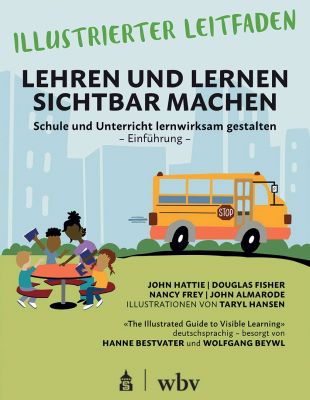
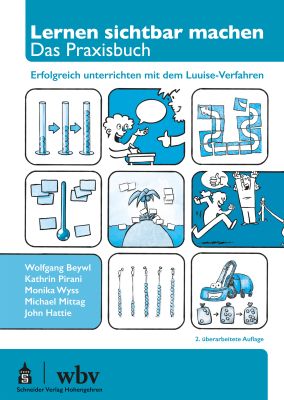
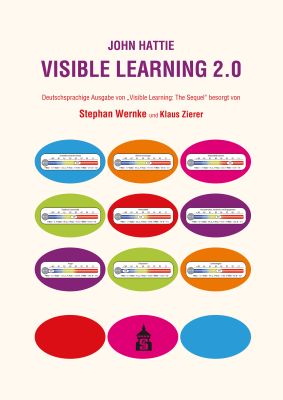
John Hattie is a New Zealand education researcher and professor at the University of Melbourne in Australia. His research synthesis “Visible Learning” (Ger.: “Lernen sichtbar machen”) has been translated into 29 languages and is regarded by many as a groundbreaking overview of empirical education research findings.